



Search why your hair is shedding and you get the same four answers: stress, hormones, iron, thyroid. Then you get an advert for a gummy.
There is a whole category underneath that — and a second category of things women are doing to help that are working against them.
Look three months back
Almost every diffuse shed follows the same clock. Something happens, and about three months later your hair comes out. The trigger pushes a group of follicles into the resting phase together, and the resting phase is roughly three months long.
So do not look at what is happening now. Look at what happened a season ago.
Rapid weight loss
This one is enormous and almost nobody warns you. Hair loss after bariatric surgery — the best-measured model of fast weight loss — occurs in 57 percent of patients, starting around 3.4 months and resolving around 9 months. It resolved on its own in every patient followed.
The same is now showing up with GLP-1 medications: high-dose oral semaglutide at 7 percent versus 3 percent on placebo, tirzepatide at 5.4 percent versus 0.9 percent.
The researchers concluded it is probably not the drug attacking your follicles — it tracks the speed of the weight loss, which is why it mirrors bariatric surgery so closely. Which means it recovers. And it means eating enough protein while you lose weight is the actual intervention, not a platitude.
Illness and medication
High fever, serious infection and major surgery all synchronise follicles. In a study of 96 hospitalised COVID patients, 31 percent developed hair loss — 73 percent of the women versus 27 percent of the men.
Drug-related shedding shows up two to four months after starting and settles within about six months of stopping. Documented classes include anticoagulants, beta-blockers, ACE inhibitors, retinoids, statins and NSAIDs. Two have real numbers: valproate at 12 to 28 percent, lithium at 12 to 19 percent.
Do not stop a prescribed medication because you read this. Take the list to your prescriber.
The part that will annoy the supplement aisle
I get asked about copper constantly. I went looking for the evidence and here is the real answer: there is not any. A meta-analysis across five studies and 339 participants found no significant difference in copper levels between people with hair loss and people without. The major review on minerals and hair has no copper section at all. Copper also carries toxicity risk and competes with zinc. Please do not take it for your hair.
Biotin. The whole consumer case rests on 18 case reports, all in people with a genuine deficiency — which is rare. Worse, biotin interferes with laboratory assays including thyroid tests. A hair supplement can hand you a wrong result from the exact test you need.
Selenium. Above about 400 micrograms a day it causes hair loss.
Vitamin A. Excess causes hair loss, and 10,000 IU a day is easy to exceed if you stack supplements.
Several products sold for hair cause the problem they claim to solve, and one of the most popular corrupts your diagnosis.
Iron, honestly
Low iron is common in women and worth correcting. But the largest controlled study — 381 women with hair loss against 76 controls — found iron deficiency was no more common in the women with hair loss. At one threshold the controls were more deficient. No trial has shown iron regrows hair.
Get it checked. Correct it. Just do not assume it is the answer and stop looking.
What to ask for
- Full blood count and ferritin
- Thyroid function, if you have other symptoms or a family history of autoimmune disease
- Coeliac serology if you have unexplained iron, B12 or folate deficiency — and keep eating gluten until tested
- Androgen profile only if you also have irregular periods, acne or excess hair growth
Not routinely useful: zinc, selenium, copper, biotin. And bring a timeline — what happened three months before it started is the most useful thing you can hand a doctor.
Meanwhile
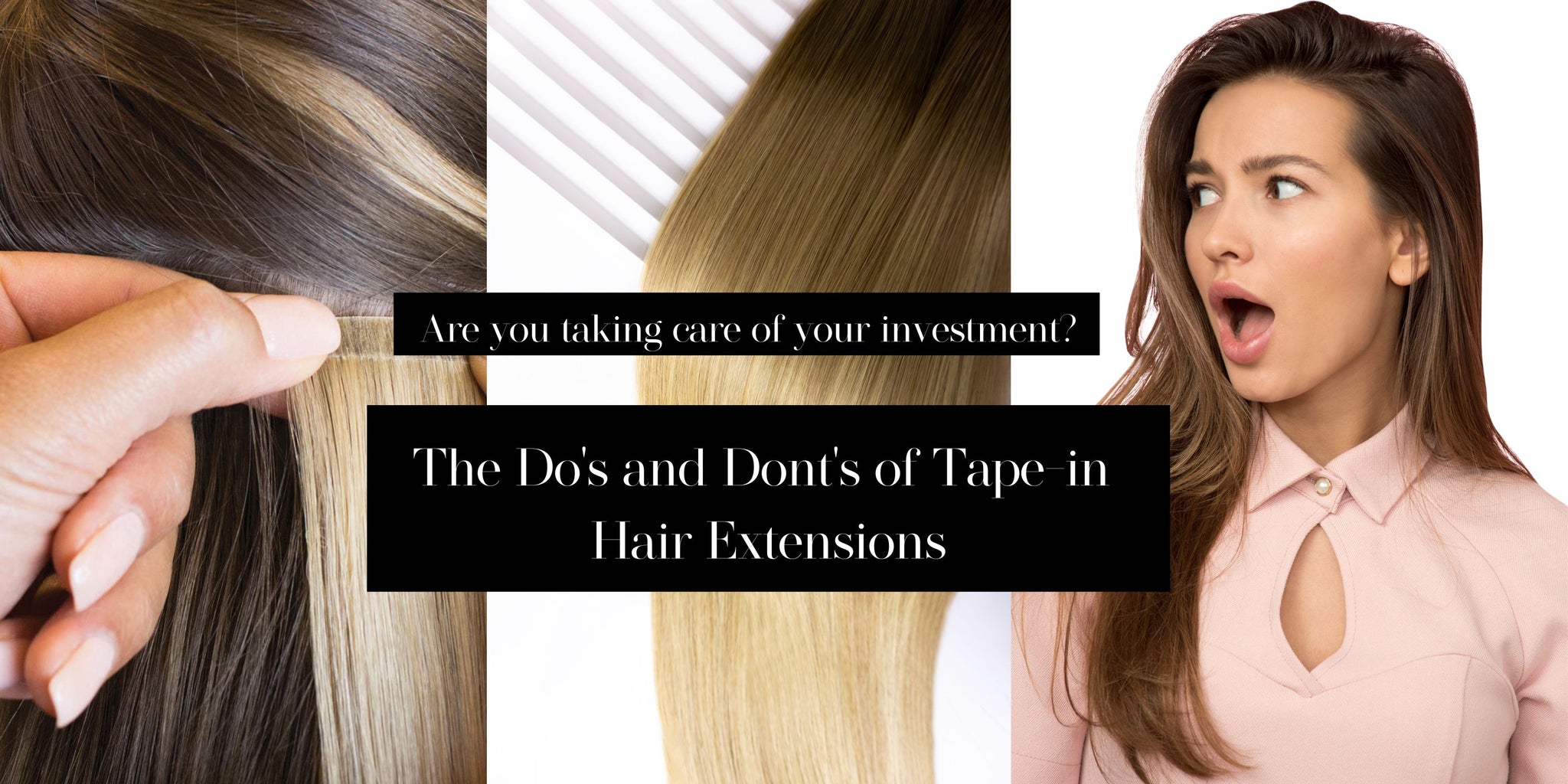
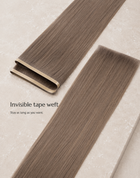
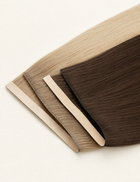
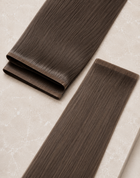
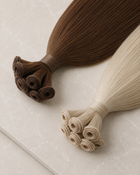
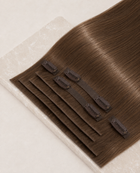
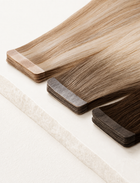
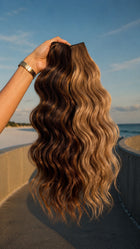
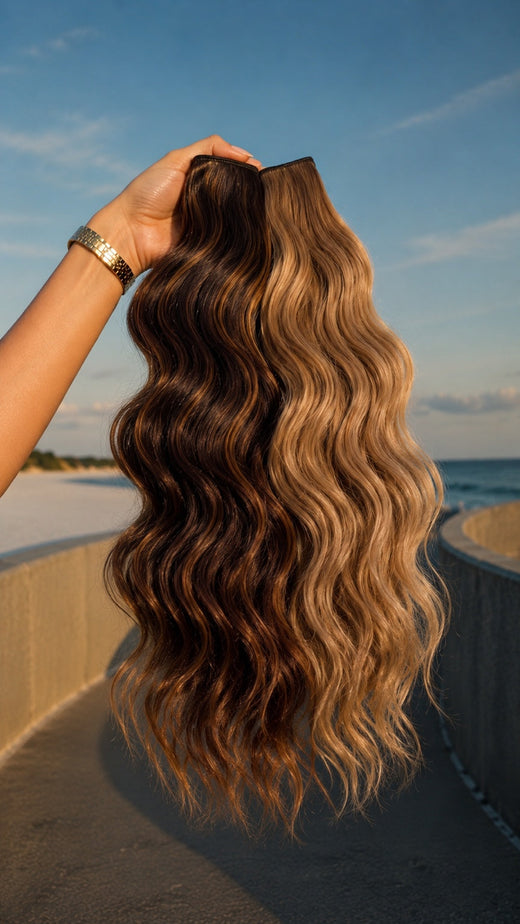
Most of this recovers, but in seasons, and you have to live through them. If your hair is fragile, be careful what you put on it. Invisible Tape-Ins are the flattest option. Invisible Clip-Ins attach nothing and come out whenever you want.
Take the quiz or send me a photo and I will match your shade myself.
Published research, not medical advice. Do not start or stop anything based on it.
Sources: Obesity Surgery 2021 · Gupta et al. 2026 · Journal of Clinical Medicine 2022;11(5):1234 · DermNet · Cleveland Clinic · Wu et al., J Cosmet Dermatol 2025 · Almohanna et al. 2019 · Olsen et al., J Am Acad Dermatol 2010;63(6):991-9 · British Association of Dermatologists, Oct 2024